







What Kind of RV Battery Do You Need to Stay Off-Grid Longer? (Cold-Weather Guide)
Boondocking—camping off the grid without shore power or generator hookups—is the ultimate test of your RV’s energy system. Whether you are running a 12V refrigerator, charging laptops, or keeping lights on through the night, your battery bank is your absolute lifeline. To stay off-grid longer without power anxiety, choosing the right battery chemistry and protection system is critical. In this guide, we break down why traditional batteries fail during extended wild camping, how freezing temperatures threaten lithium power systems, and how to select the ideal LiFePO4 battery for your setup.
1. Understanding Off-Grid Power: Why Depth of Discharge (DoD) Matters
- The Off-Grid Challenge:Boondocking relies entirely on stored energy without shore power hookups, making battery efficiency critical.
- What is Depth of Discharge (DoD)?Explanation of how much capacity can be safely drained from a battery before recharging.
- The Golden Rule for Off-Grid Living:Higher DoD directly equals more usable energy, fewer recharge cycles needed, and freedom to stay off-grid longer.
2. Why Traditional Lead-Acid Batteries Fail Prolonged Wild Camping
- Strict DoD Limitations:Traditional lead-acid batteries can only be discharged down to 50% without suffering permanent cell damage, effectively cutting their advertised capacity in half.
- Peukert’s Effect & Voltage Drop:Under heavy power demands (like running water pumps or refrigerators), lead-acid voltage drops rapidly, leading to premature shutdown of appliances.
- Weight and Cycle Life Limits:Heavier weight combined with a low cycle life (300–500 cycles) makes lead-acid an inefficient choice for long-term boondocking.
3. The Low-Temperature Vulnerability: Why Charging Lithium Below 0°C (32°F) Kills Cells
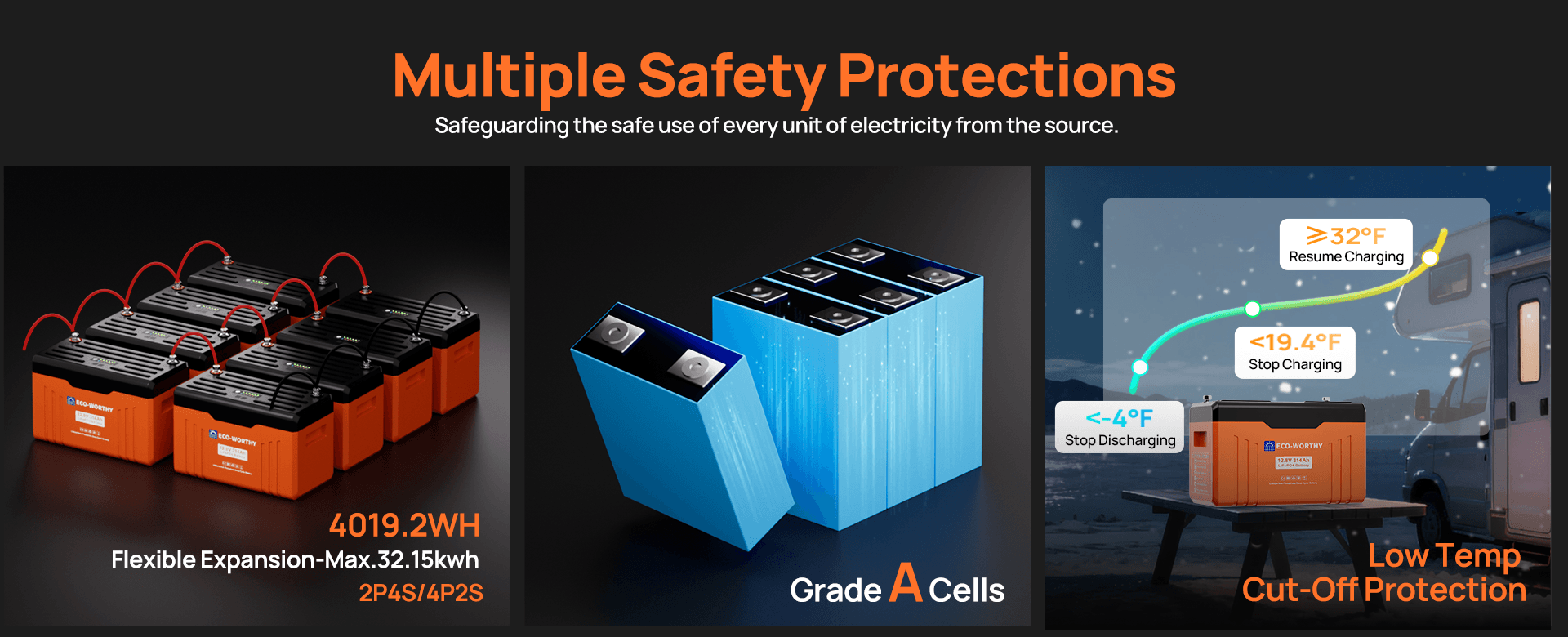
- The Danger of Cold Weather Charging:Charging standard LiFePO4 batteries below freezing causes metallic lithium to plate onto the anode, creating permanent short circuits and severe capacity loss.
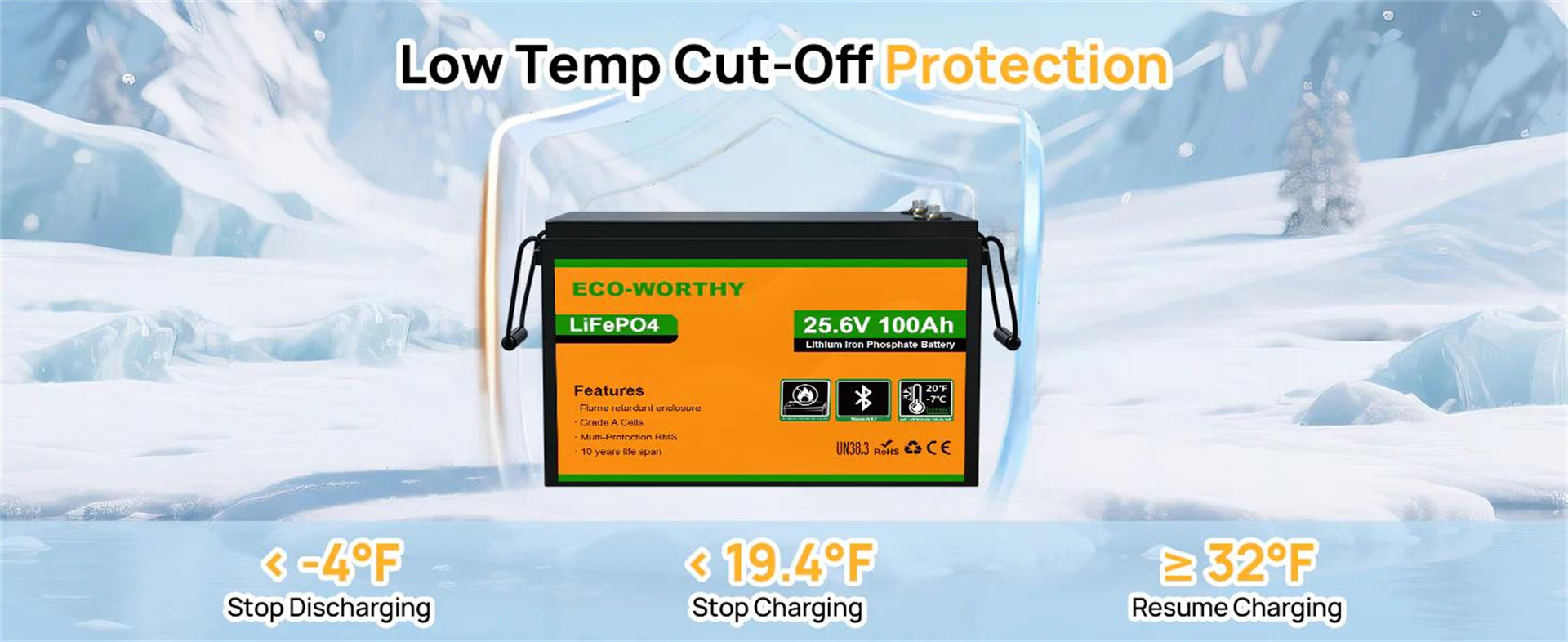
- Why You Need RV Battery Low Temperature Protection:Built-in heating padsand intelligent sensors automatically suspend charging below freezing, protecting your investment from fatal lithium plating.
- All-Weather Reliability:How an integrated BMS (Battery Management System)with a self-heating battery design ensures your winter RV energy storage stays operational during unexpected freezing weather.
4. Choosing the Right LiFePO4 Battery Solution for Your Off-Grid RV Setup
- High-Capacity Off-Grid Powerhouse with Low-Temp Safeguards:
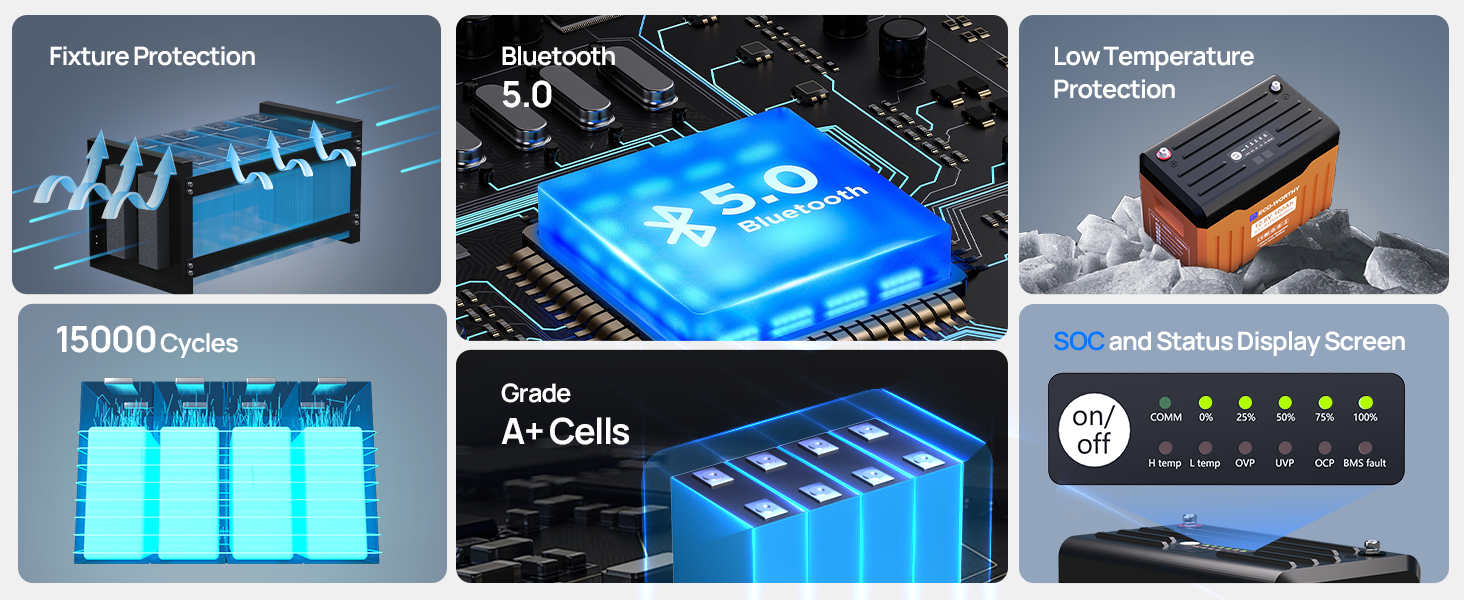
12V 314Ah LiFePO4 Battery with SOC LEDs & Low-Temp Protection: The ultimate solution for long-term off-grid stays. Delivers massive energy density, built-in low-temperature protection for cold climates, and LED state-of-charge indicators.
- Compact & Scalable 12V Energy Systems:
12V 100Ah LiFePO4 Battery with SOC Display: Ideal for lightweight camper vans and modular 12V setups, featuring an integrated SOC display to easily monitor real-time power levels.
- High-Efficiency 24V System Upgrades:
24V 100Ah LiFePO4 Battery Setup: Designed for medium-to-large RVs requiring a 24V architecture to reduce wiring thickness, boost inverter efficiency, and power high-draw appliances smoothly off-grid.
Summary
To extend your off-grid camping trips, upgrading from traditional lead-acid to LiFePO4 technology provides double the usable energy (up to 100% DoD) at half the weight. For true year-round independence, equipping your setup with RV battery low temperature protection guarantees your battery investment remains completely protected against lithium plating during unexpected winter freezes.