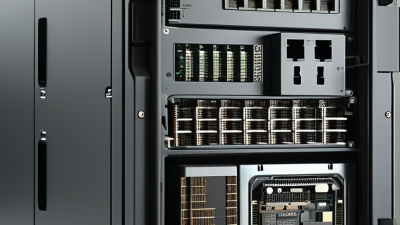
A rack battery is actually a pretty practical way to organize energy storage, especially in commercial and industrial setups. Its modular design means you get battery modules, protection gear, and monitoring parts all tucked inside a neat, structured enclosure. That setup can really save floor space and make routine checks way easier — technicians can quickly inspect connections, monitor temperatures, and check alarms all from one accessible spot. Trust me, that kind of layout really does make a difference.
When you’re deploying these systems out in the field, a rack-based setup often makes capacity planning way clearer. You can add compatible modules as your demand grows — no need to swap out the whole unit. Plus, some Battery Server Racks even come with integrated battery management systems, inverters, and communication interfaces. That stuff really helps your team keep tabs on the state of charge, cell balance, and any weird temperature spikes. Good data means you can make smarter, safer choices. But, let’s be real — performance isn’t just about the cabinet itself. Things like heat, airflow, wiring quality, and how carefully everything’s installed still make a big difference. Skimp on those, and it can all go south pretty fast.
Picking the right rack battery isn’t just about shiny specs that catch your eye. You’ve gotta do some homework: review how much usable capacity you’re actually getting, how many cycles it can handle, charging limits, warranty details, and how easy it is to access for maintenance. It’s also smart to double-check that it plays nicely with your inverter and overall power system. Looking at independent test results and safety certifications can give you extra peace of mind. Still, some people overlook little things like airflow restrictions or confusing maintenance labels — trust me, those can cause headaches later on. A well-thought-out rack battery system can boost your ability to scale up and keep operations running smoothly, but it’s not a magic fix for every situation. Good planning, skilled installation, and regular check-ups are what really keep things running reliably for the long haul.
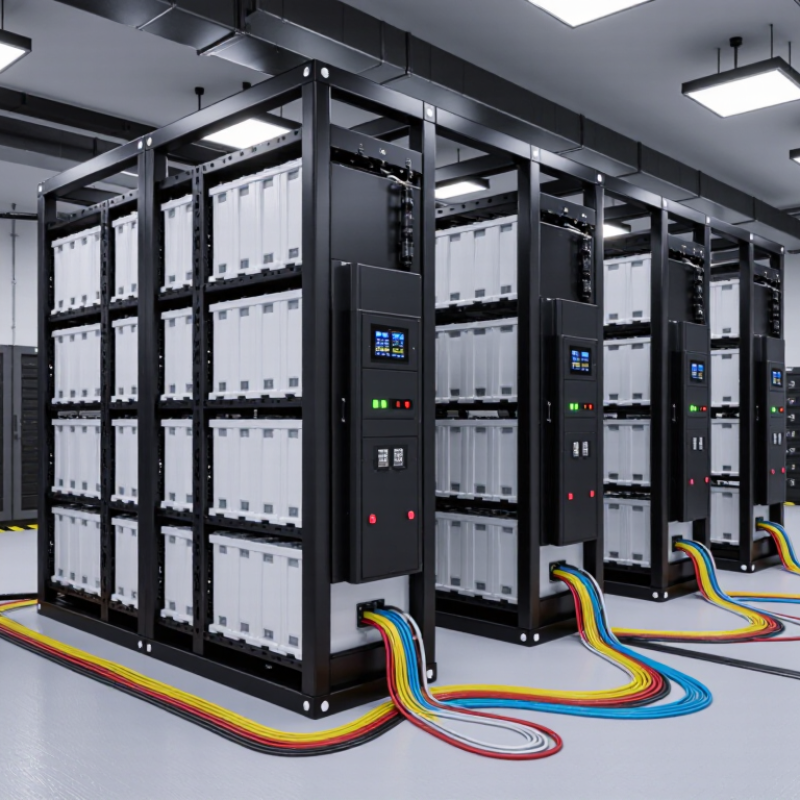
A Server Rack Battery is a modular energy storage unit built inside a standard equipment rack. It usually contains lithium-ion battery modules, a battery management system, contactors, sensors, and communication controls. Each module stores direct-current electricity. An inverter later converts it into usable alternating current for servers, buildings, or microgrids.
The battery management system monitors voltage, temperature, and state of charge in real time. If one cell becomes too hot, it can reduce charging or disconnect the affected module. Several racks can operate in parallel, adding capacity without redesigning the entire room. This makes expansion practical, though cable sizing, ventilation, fire protection, and load balancing still require professional review. It is not simply “plug and play.”
The International Energy Agency reported in 2024 that global energy storage capacity may need to increase sixfold by 2030, reaching about 1,500 GW in its net-zero scenario. That pressure explains the growing interest in rack-based systems. Still, real performance depends on temperature, charging habits, and maintenance quality. Laboratory figures can look better than daily operation.
Tips: Check the usable capacity, not only the advertised capacity. Leave space for airflow around each rack. Review the battery’s warranty conditions and communication protocol. Test alarms regularly. Small oversights matter.
A rack battery stores electrical energy inside modular battery packs arranged in a cabinet. Each module contains cells, sensors, and protection circuits. The battery management system, or BMS, monitors voltage, temperature, current, and state of charge. This control layer helps prevent unsafe charging and excessive discharge.
When solar power or grid electricity is available, a charger sends controlled DC power into the modules. The cells convert electrical energy into chemical energy during charging. During demand, the process reverses. Stored DC power travels through a battery bus and reaches an inverter. The inverter then supplies usable AC power to servers, lighting, pumps, or other equipment. In a Server Battery Rack, communication cables also share battery status with monitoring software. Operators can see temperature changes, remaining capacity, and charging faults before they become serious disruptions.
Good installation depends on more than battery capacity. Technicians check cable torque, airflow, grounding, enclosure spacing, and load profiles. A hot cabinet may reduce performance faster than expected. Uneven module aging can create another problem. A system may show adequate charge while delivering less runtime under heavy load. That is why testing should include real discharge conditions, not only screen readings. Field results are rarely perfect. Maintenance records, periodic inspections, and updated settings help reveal where the original design needs adjustment.
Rack batteries make energy storage easier to expand, service, and monitor. Each cabinet can hold multiple battery modules, power electronics, sensors, and protection devices. This structure supports gradual capacity growth instead of requiring one oversized installation. The International Energy Agency reported that global battery storage additions reached about 42 GW in 2023, more than doubling from the previous year. That growth increases the value of flexible, modular designs.
Operational visibility Rack batteries also improve operational visibility. A well-designed system can track voltage, temperature, current, and state of charge at module level. Technicians can replace a faulty module without removing the entire storage system. Clear rack layouts may reduce service time, especially in facilities with narrow aisles and strict maintenance schedules. The U.S. Department of Energy emphasizes monitoring, thermal management, and system-level safety in its Energy Storage Grand Challenge materials. These details matter. A neat cabinet is not enough.
Space efficiency and project requirements Space efficiency is another practical benefit. Vertical racks can use available floor area more effectively than scattered battery units. They can support solar shifting, backup power, and peak-demand control within the same site. However, rack batteries are not automatically safer or cheaper. Poor ventilation, weak installation practices, or incomplete monitoring can create serious performance problems. Real projects still require load studies, fire-safety planning, and regular inspections. The numbers look promising, but field conditions remain imperfect.
Common rack battery chemistries suit different loads, temperatures, and maintenance expectations. Lithium iron phosphate batteries offer strong cycle life and stable thermal behavior. They also provide consistent output in compact cabinets. Nickel manganese cobalt batteries can deliver high energy density, but thermal management requires closer attention. Lead-acid batteries remain practical for smaller budgets and backup systems. However, they need more space, ventilation, and routine inspection.
Rack batteries can use series configurations to raise voltage and parallel configurations to increase capacity. A 48-volt rack may support several modules in parallel, while larger systems use higher-voltage strings. The battery management system should monitor cell voltage, temperature, current, and state of charge. Poor balancing can reduce usable capacity. That detail is easy to overlook. In real installations, cable length, connector ratings, cabinet airflow, and accessible isolation points also affect reliability. No chemistry wins every site.
Tips: Match the chemistry to the duty cycle, not only the purchase price. Check the manufacturer’s tested voltage range and recommended depth of discharge. Leave space for airflow and service access. Ask a qualified installer to verify protection settings and load calculations. A simple commissioning test can reveal loose connections, incorrect readings, or unexpected heat. Recheck the design after seasonal temperature changes.
Choosing a Rack Mounted Battery requires more than comparing advertised capacity.
The International Energy Agency’s Batteries and Secure Energy Transitions report states that global battery storage additions reached about 42 GW in 2023, nearly twice the previous year. This growth increases choice, but it also makes system selection less straightforward.
Start with the load profile, not the battery cabinet. Measure daytime peaks, overnight demand, outage duration, and future expansion plans. Measure the real load. A 100 kWh battery may not deliver 100 kWh under high temperature, aging, or conservative depth-of-discharge limits. Check usable energy, continuous power, round-trip efficiency, cycle rating, and response time. The battery management system should provide cell-level monitoring, alarms, balancing, and remote diagnostics.
Rack layout matters in real rooms. Confirm clearance, ventilation, floor loading, cable routes, and service access before ordering. Select lithium chemistry according to temperature, fire strategy, and cycling needs. Require documented testing against relevant IEC safety standards and local electrical and fire requirements. Lazard’s Levelized Cost of Storage, Version 10.0 (2024), shows that storage costs vary significantly with duration, utilization, and financing assumptions. The cheapest quotation may therefore be expensive per delivered cycle. Forecasts can be wrong. Leave space for change. Evaluate warranty exclusions, replacement procedures, software access, and end-of-life handling with the same care as the initial price.
A 48v Rack Mount Battery can simplify energy storage when the cabinet is planned carefully. I once underestimated the weight of a fully assembled rack. The frame needed stronger anchoring than expected. Measure the floor area, access route, and ventilation space before delivery. Keep cables short, protected, and clearly labeled. A qualified electrician should confirm polarity, grounding, disconnects, and local electrical requirements. Never rely on appearance alone.
Safety begins with controlled installation conditions. Keep batteries away from water, direct heat, and combustible materials. The room should stay within the battery’s specified temperature range. Install suitable overcurrent protection and an accessible emergency disconnect. Check that the battery management system communicates correctly with the inverter. Small wiring errors can create serious faults. I have seen neat installations fail because terminals were not tightened to the required torque.
Maintenance should be simple, but it still needs discipline. Inspect cables, terminals, racks, and ventilation paths at scheduled intervals. Look for swelling, corrosion, unusual odors, or unexpected temperature changes. Record voltage readings and system alarms instead of trusting memory. Clean dust with approved methods, not compressed air near sensitive components. Firmware updates may improve performance, yet compatibility must be verified first. The process is not perfect. A maintenance log can still reveal problems early. Have a qualified technician investigate repeated alarms, physical damage, or abnormal charging behavior.
Lithium iron phosphate offers long cycle life and stable thermal behavior. It suits frequent cycling. Nickel-based chemistry can store more energy in less space. It needs closer thermal management. Lead-acid may fit smaller budgets and backup duties. No chemistry wins every site.
Measure daytime peaks, overnight demand, and expected outage duration. Do not size from advertised capacity alone. A 100 kWh battery may provide less usable energy in heat or old age. Check usable energy, continuous power, efficiency, and response time. Measure the real load. That step is easy to skip.
Series connections raise system voltage. Parallel connections increase capacity. A 48-volt rack can use several parallel modules. Larger systems may use higher-voltage strings. The final design must match inverter and protection limits. More modules mean more connections.
It should monitor cell voltage, temperature, current, and charge state. It should also provide balancing, alarms, and remote diagnostics. Poor balancing can reduce usable capacity. A warning light may reveal an uneven cell. Do not treat monitoring as optional.
Check cabinet clearance, ventilation, floor loading, and cable routes. Leave enough space for inspection and module replacement. Keep isolation points easy to reach. Cable length and connector ratings affect reliability. Airflow matters. A crowded room can hide rising heat.
High temperatures can reduce available energy and increase thermal stress. Cold conditions may affect power and charging behavior. Review the tested operating range before ordering. Recheck the design after seasonal temperature changes. Winter may expose weak assumptions.
Compare usable energy, continuous output, round-trip efficiency, cycle rating, and response time. Review the permitted depth of discharge. Check warranty exclusions and replacement procedures. Confirm software access and end-of-life handling. The cheapest quote may cost more per delivered cycle. Forecasts can be wrong.
A qualified installer should verify protection settings and load calculations. A commissioning test can reveal loose connections or incorrect readings. It can also detect unexpected heat. Record voltage, current, temperature, and alarm responses. Do not rush this stage. Small errors can become expensive.
A Rack Battery is a modular energy storage unit designed to fit into standardized equipment racks, making it practical for homes, commercial facilities, data centers, and renewable energy systems. It stores electricity in battery cells and uses a battery management system, power conversion equipment, and safety controls to deliver energy when needed. By charging during periods of excess generation or lower demand and discharging during peak usage or outages, rack batteries can improve energy efficiency, backup reliability, and system flexibility.
The main benefits of rack batteries include scalability, organized installation, efficient space usage, and easier maintenance. Common options may use different battery chemistries and configurations, each offering distinct advantages in cost, lifespan, energy density, and safety. Choosing the right system requires evaluating capacity, power output, voltage, cycle life, compatibility, environmental conditions, and future expansion needs. Proper installation should include suitable ventilation, electrical protection, fire safety measures, and compliance with local requirements. Regular inspections, performance monitoring, and professional maintenance help preserve safe and reliable operation.