- Home
- Products
- Solution
- About
- Contact
- Dealer Application
Leave Your Message
So, a Rack Mounted Lithium Battery is basically a modular system designed for organized, scalable power management. Think of it as a bunch of lithium-ion battery modules housed inside a standard equipment rack — kinda like a server cabinet, but with a totally different purpose. Inside, you'll find battery modules, a battery management system (BMS), contactors, fuses, and communication controls all working together.
Here's how it works: When you’re charging, the system stores electrical energy in the battery cells. When you need power, those cells send direct current to an inverter, which then converts it into usable alternating current—perfect for powering equipment, buildings, or backups. The BMS keeps an eye on things—monitoring voltage, temperature, current, and how much charge is left. If something goes wrong, it can even isolate a faulty module in just milliseconds. That kind of quick action is a big deal, especially in places like data centers or telecom setups.
Dr. Jeff Dahn, a well-known lithium-ion battery researcher and ex-Tesla advisor, made it simple when he said, “The battery is a very complex device.” And that really hits the nail on the head here. A rack-mounted battery isn’t just an empty box of cells — it’s a carefully coordinated system that needs proper installation, balanced charging, good ventilation, and regular checks.
In the real world, technicians often notice small warning signs before things get serious. Maybe a connector feels warm, the voltage across modules isn't even, or alarms pop up repeatedly. These don't always mean the system has completely failed, but they sure are red flags. Plus, a nice-looking diagram can make it seem like everything’s perfect, but actual performance depends on stuff like load patterns, room temperature, firmware settings, and how well you keep everything maintained.
This article digs into what makes up a Rack Mounted Lithium Battery system—how it works, what advantages and limits it has, and important safety tips. We’ll also take a closer look at where their claimed efficiency really holds up and where it might need a bit more scrutiny.
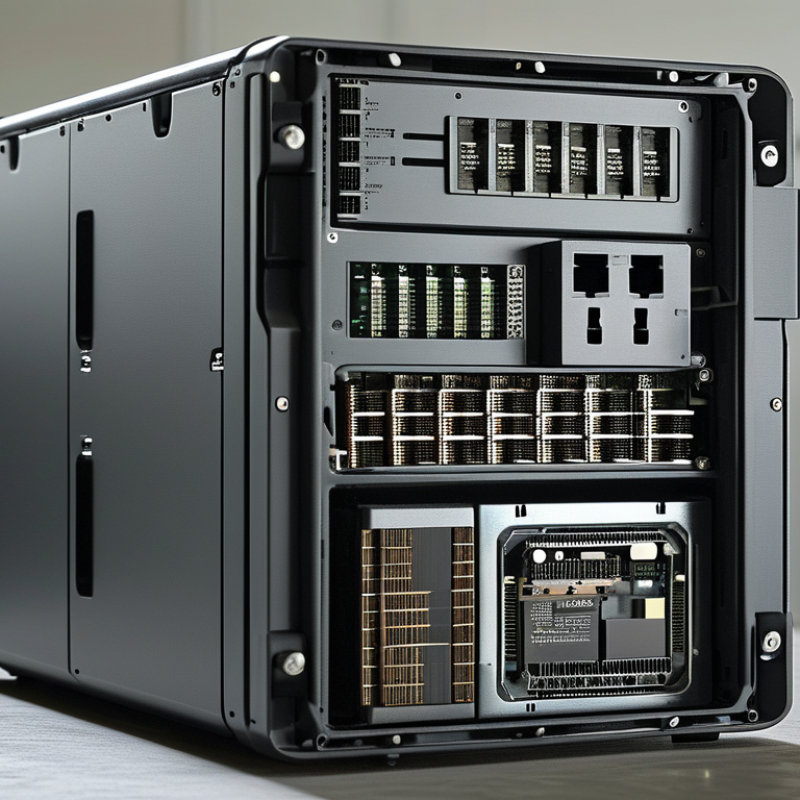
What Is a Rack Mounted Lithium Battery and How Does It Work?
A rack-mounted lithium battery is a modular energy storage unit designed for a standard 19-inch equipment rack. Each module commonly stores between 2 and 5 kWh. A 48v 50ah Rack-Mounted Lithium Battery provides about 2.4 kWh before normal operating limits and energy losses. Several modules can share a rack and expand storage without replacing the entire system.
Inside each module, lithium cells connect to a battery management system, or BMS. The BMS monitors voltage, temperature, current, and cell balance. It can stop charging when conditions become unsafe. During operation, the battery sends direct current to an inverter or compatible DC load. The inverter then supplies usable alternating current to appliances, servers, or backup circuits.
A practical installation needs more than rack space. Check the cabinet depth, rail strength, ventilation, cable size, and communication settings. Leave room for inspection and safe servicing. The battery may look compact, but its weight is concentrated in a small enclosure. In real projects, capacity estimates are rarely perfect. Cold temperatures, conversion losses, and aging reduce available energy. I would also verify the BMS protocol before connecting multiple modules. A connector may fit while the communication settings remain incompatible. Installation should follow the equipment manual and applicable electrical requirements.
| Data Dimension | Typical Specification or Description | Why It Matters |
|---|---|---|
| Definition | A modular lithium-ion battery designed to slide into a standardized equipment rack, commonly using a 19-inch rack format. | Enables organized installation, easier maintenance, and scalable energy storage. |
| Common Module Capacity | Approximately 2–5 kWh per battery module. | The total system capacity can be increased by connecting multiple modules in parallel. |
| Typical Nominal Voltage | Common low-voltage configurations include approximately 48 V or 51.2 V nominal, depending on cell chemistry and system design. | Voltage compatibility is essential when connecting the battery to an inverter, charger, or DC power system. |
| Battery Chemistry | Lithium iron phosphate (LiFePO₄) is widely used in stationary storage because of its thermal stability and long cycle life. | Chemistry affects safety, usable capacity, operating temperature, weight, and service life. |
| Rack Width | The standard equipment rack width is 19 inches, or approximately 482.6 mm, between the mounting rails. | The standardized width allows compatible batteries and electronic equipment to share the same rack infrastructure. |
| Rack Height | Rack height is measured in rack units (U); 1U equals 44.45 mm. Battery modules commonly occupy several rack units. | Rack-unit sizing helps installers plan cabinet capacity, ventilation, and clearance. |
| Energy Calculation | Stored energy in watt-hours is approximately calculated as: nominal voltage × ampere-hours. For example, 51.2 V × 100 Ah ≈ 5.12 kWh. | This calculation helps estimate runtime and determine the number of modules required. |
| Main Internal Components | Battery cells, cell interconnects, a battery management system (BMS), enclosure, terminals, fuses or breakers, temperature sensors, and communication interfaces. | These components store energy, control operation, provide protection, and communicate system status. |
| How It Works During Charging | A compatible charger or inverter supplies controlled direct current. The BMS monitors voltage, current, and temperature while balancing cells as needed. | Controlled charging helps prevent overvoltage, overheating, and cell imbalance. |
| How It Works During Discharge | The battery supplies DC power to an inverter or DC load. The inverter can convert the DC output into AC electricity for connected equipment. | This allows the battery to support backup power, renewable-energy systems, and telecommunications loads. |
| BMS Protection Functions | Overcharge protection, over-discharge protection, overcurrent protection, short-circuit protection, temperature monitoring, and cell balancing. | The BMS helps keep the battery within safe electrical and thermal operating limits. |
| Usable Capacity | Usable energy is lower than the nameplate capacity because operating limits and reserve margins protect the cells. | Runtime estimates should use the manufacturer-defined usable energy rather than nominal energy alone. |
| Scalability | Multiple compatible modules may be connected in parallel to increase energy capacity and, within system limits, power capability. | Modular expansion can reduce the need for a complete system replacement as power requirements grow. |
| Typical Applications | Uninterruptible power systems, telecommunications, data and network equipment, solar-plus-storage systems, microgrids, and backup power installations. | The rack format is suitable for locations that require compact, serviceable, and expandable energy storage. |
| Advantages Over Lead-Acid Batteries | Higher energy density, lower weight for comparable energy, better efficiency, faster charging capability, and generally longer service life. | These characteristics can reduce floor space, maintenance needs, and replacement frequency. |
| Operating Temperature | The allowable range depends on the cell design and BMS; charging is typically more temperature-sensitive than discharging. | Temperature control and adequate ventilation help maintain safety, performance, and battery life. |
| Installation Requirements | A suitable rack or cabinet, secure mounting, correctly sized cables, protective devices, grounding where required, and sufficient ventilation. | Correct installation prevents mechanical damage, excessive voltage drop, overheating, and connection faults. |
| Communication Interfaces | Common interfaces include CAN bus, RS-485, and dry-contact alarm outputs, depending on the system design. | Communication enables the inverter or energy-management system to receive battery status and protection information. |
| Runtime Estimation | Approximate runtime in hours = usable battery energy in kWh ÷ load power in kW, with additional allowance for conversion losses. | Actual runtime varies with load size, inverter efficiency, temperature, battery age, and operating limits. |
| Safety Considerations | Use a compatible charger and inverter, follow electrical codes, avoid damaged modules, maintain clearances, and have installation performed by qualified personnel. | Proper design and installation reduce the risk of electrical faults, thermal events, and equipment damage. |
: It stores electrical energy inside a compact cabinet or server-style rack. It suits homes, servers, and small commercial systems. The enclosure protects internal parts.
A 48 V pack usually contains fifteen LiFePO₄ cells in series. A 51.2 V pack commonly contains sixteen cells. This difference affects inverter settings and charging limits.
Its ideal capacity is about 4.8 kilowatt-hours. Actual usable energy may be lower. Temperature, load, and reserve settings change the result.
The BMS monitors cell voltage, temperature, current, and charge status. It can stop charging or disconnect loads during unsafe conditions. It is not a substitute for careful installation.
Balancing reduces small voltage differences between series-connected cells. Passive balancing works slowly and releases excess energy as heat. Small differences still deserve attention.
Sensors monitor cells and terminals during charging and discharge. High heat may reduce current or stop operation. Cold cells may accept energy poorly.
Check terminal torque, cable size, polarity, airflow, and temperature readings. Review alarm history and balancing behavior. A tidy rack can still hide a loose connection.
No. Inverter compatibility and charging limits must be checked carefully. BMS settings must match the battery design. Assumptions can fail. Recheck the technical data sheet and local requirements.
A Rack Mounted Lithium Battery is a modular energy storage system designed to fit standard 19-inch equipment racks. It typically uses 2–5 kWh modules built from 48 V or 51.2 V LiFePO₄ battery packs, along with busbars, protective enclosures, and a battery management system (BMS). Lithium-ion cells store energy through reversible chemical reactions: charging moves energy into the cells, while discharging releases it as direct current for connected equipment.
During operation, DC power flows from the battery to an inverter, which can convert it into usable AC electricity. Charging reverses this process, and a well-designed system can achieve approximately 90–95% round-trip efficiency. The BMS continuously monitors voltage, temperature, current, and cell balance to support safe and reliable performance. Key specifications include capacity, depth of discharge (DoD), C-rate, thermal limits, and cycle life, with many LiFePO₄ systems capable of more than 6,000 cycles under suitable operating conditions.