Leave Your Message
*Name Cannot be empty!
*City Cannot be empty!
Installation Cannot be empty!
0%

Picking out a Rack Mounted Lithium Battery isn’t just about comparing capacity and price—it’s a bit more involved than that. The real starting point is understanding what your system actually needs, how much rack space you have, and what you might need down the line. When you’re making an informed choice, you’ll want to look at things like voltage, usable energy, how quickly it can discharge, how many cycles it can handle, and whether it plays nicely with your existing communication systems. Don’t forget to check out the battery management system, thermal controls, build quality of the enclosure, and what kind of environment it’s meant for.

Here’s a handy tip—measure twice, cut once. A battery that’s rated at 10 kWh might end up offering less usable energy once you account for reserve margins and losses during conversion. That small difference? Actually pretty important—especially if you're dealing with critical setups like server rooms, solar setups, or backup power. Experienced guys in the field always double-check rack depth, what mounting hardware is needed, ventilation, cable routing, and how easily you can get to everything for maintenance before buying anything. Also, they verify whether the battery supports communication protocols like CAN bus or RS485 and if it’ll play nice with the inverter you’ve got. Issues with compatibility often only show up when it's a little too late—like during a blackout.

Safety should seriously be your top priority. Reputable brands usually publish test results, their operating limits, warranty details, and maintenance tips openly. If something sounds too good to be true or vague, dig a little deeper. Look for independent certifications and traceable manufacturing origins—these boost your confidence, but remember, they don’t replace doing the proper installation. Things like temperature, charging speed, and storage conditions all still matter for real-world performance. Even the best batteries can give you trouble if they’re installed or set up incorrectly.

This guide’s here to help you understand how to compare different rack-mounted lithium batteries using practical criteria. It touches on total ownership costs, planning for replacement, monitoring features, and the kind of support you can expect. Be aware—some specs might look similar at first glance, but they could have been tested under different conditions. It’s easy to overlook that stuff, but it’s super important. The smart move? Ask questions about any unclear figures, get that warranty in writing, and pick a battery that works well not just for today’s needs but for what you’ll require tomorrow too.
How to Choose a Rack Mounted Lithium Battery?

Define Your Power Requirements and Usage Conditions

How to Choose a Rack Mounted Lithium Battery?

Define your power requirements and usage conditions before comparing battery cabinets. Start with the actual load, not the inverter label. Record continuous watts, startup surges, backup duration, and daily cycling frequency. A 48v 50ah Rack-Mounted Lithium Battery stores about 2.4 kWh nominally. Usable energy is lower after depth-of-discharge and conversion losses. At 90% discharge and 90% efficiency, expect roughly 1.94 kWh. Check the calculation against real equipment data. A neat spreadsheet can still lie.

A neat spreadsheet can still lie.

Usage conditions matter equally. Measure the rack’s available height, depth, ventilation, and cable paths. Confirm the battery’s operating temperature, humidity limits, communication protocol, and protection functions. The International Energy Agency’s Batteries and Secure Energy Transitions report highlights rapidly growing battery-storage deployment, increasing the need for careful system integration. Uptime Institute’s 2024 Global Data Center Survey also identifies power issues as a major contributor to serious outages. Therefore, verify peak current, recharge time, and whether parallel modules are supported. Do not assume a “48V” unit matches every 48V inverter.

Tips: Photograph the rack area first. Record the coldest and hottest conditions. Test the real load if possible. Leave capacity headroom; batteries age, and demand changes.

I would also review alarm logs after installation, because small warnings are easy to ignore. That is an imperfect step, but it often reveals poor settings, loose connections, or unexpected cycling.

Compare Battery Chemistry, Capacity, and Voltage Options

Choosing a rack mounted lithium battery starts with chemistry, not appearance. Lithium iron phosphate offers strong thermal stability and long cycle life. It is often suitable for stationary storage. Nickel manganese cobalt chemistry can provide higher energy density in limited rack space. However, it usually demands stricter thermal management. I have seen compact systems underperform when ventilation was treated as an afterthought. Small detail, big consequence.

Capacity should match the actual load profile. Calculate daily energy use in kilowatt-hours, then include inverter losses and a practical reserve. A 10 kWh battery may deliver less usable energy after depth-of-discharge limits. Check the datasheet carefully.

Peak power also matters. A battery can store enough energy but still struggle with motor startup or sudden server loads. My first sizing estimate once ignored short-term surges, which was a costly lesson. Measure real loads when possible.

Voltage must match the inverter, charger, and DC distribution system. Common rack systems use low-voltage or high-voltage configurations, depending on the application. Higher voltage is not automatically better. It can reduce current, but installation requirements may become more demanding. Confirm the battery management system supports communication, alarms, balancing, and safe shutdown. Check rack depth, connector placement, weight, and clearance before delivery. Independent testing records and qualified installation support add useful confidence. Controls should remain understandable during a fault.

Check Rack Dimensions, Mounting Standards, and Weight Limits

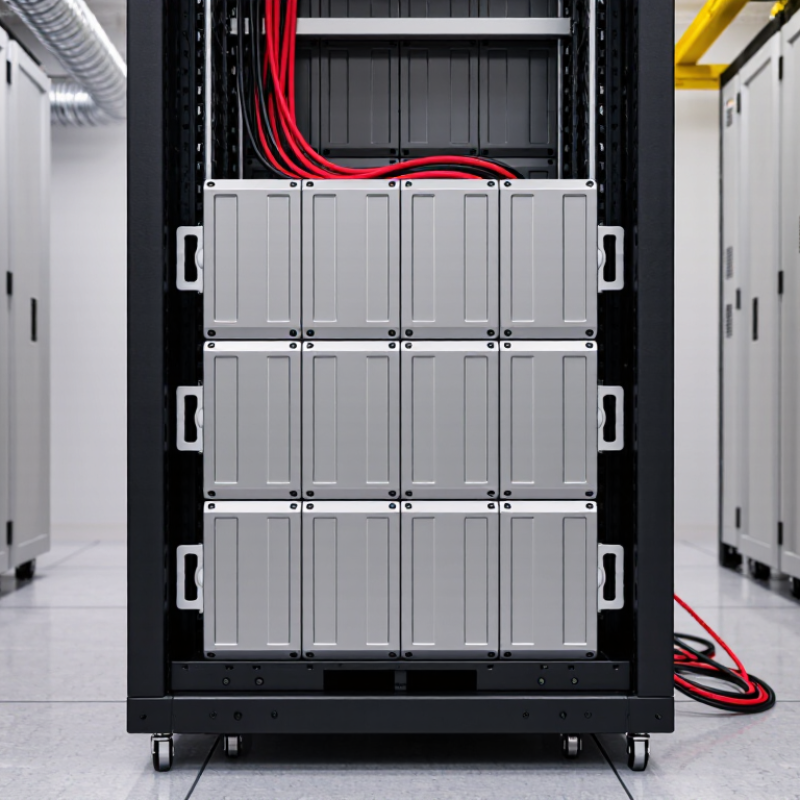
Choosing a rack-mounted lithium battery starts with physical fit, not advertised capacity. The EIA-310 standard defines a 19-inch rack and 1.75-inch rack units. Confirm both measurements before ordering. A 48v 200ah Rack-Mounted Lithium Battery stores about 9.6 kWh. Its enclosure may exceed 80 kilograms.

Measure depth carefully. Door clearance, cable bends, and rear ventilation need space. A battery can fit the rails yet block airflow. That is a costly mistake. Check whether the cabinet uses square holes, threaded holes, or cage nuts. Rail spacing must match the battery tray, not simply the cabinet width. IEC 60297 provides useful mechanical guidance for 19-inch equipment integration, but it does not approve every battery installation. Ask for the rail load rating and mounting hardware specification.

Weight deserves a separate calculation. Add battery mass, rails, cables, and any sliding tray. Compare that total with the rack’s static and dynamic limits. Rolling cabinets may carry less during movement. The 2024 International Energy Agency report records global battery demand above 750 GWh in 2023, showing rapid deployment across storage applications. Rapid growth does not remove installation risks. In practice, published weight figures can exclude brackets. Recheck the shipping label and service clearance. A small measurement error can become a serious alignment problem.

Evaluate Safety Features, Battery Management, and Certifications

Choosing a rack-mounted lithium battery starts with safety, not capacity. A 48v 100ah Rack-Mounted Lithium Battery should include protection against overcharge, deep discharge, overcurrent, short circuits, and excessive temperature. Look for cell-level monitoring and a sturdy enclosure with insulated terminals. Clear spacing around the rack also matters. Heat needs somewhere to escape.

The battery management system, or BMS, controls daily performance. Check whether it supports cell balancing, state-of-charge readings, fault records, and communication through CAN or RS485. These details help technicians identify weak cells before an unexpected shutdown. Confirm that the BMS matches the inverter and charging equipment. Compatibility is often overlooked. I have seen installation plans fail because communication settings were assumed, not tested.

Certifications add confidence when documents are traceable and current. Review evidence for relevant standards, such as IEC 62619 or UL 1973, according to the installation region. UN 38.3 test documentation may also be important for transport. Ask for reports from recognized testing laboratories, not only printed claims. A checklist can still miss poor cable routing or loose terminals. Inspect the actual battery, read the installation instructions, and record the commissioning results. Small details matter.

Assess Performance, Charging Needs, and Expected Service Life

Choosing a rack-mounted battery starts with the real electrical load, not the advertised capacity. A Rack-Mounted Lithium Iron Phosphate Battery should support continuous demand, short startup surges, and the required backup duration. Record peak watts, daily energy use, and the number of expansion modules planned. In practical installations, poor load estimates cause more failures than chemistry alone. Check the battery management system, inverter compatibility, communication ports, and available rack space. Silent compatibility matters.

Charging needs deserve equal attention. Confirm the charger profile, voltage range, current limit, and termination method before installation. LFP batteries need controlled voltage and protection against overcharging. Avoid charging below freezing unless the system provides low-temperature protection. Set charging current according to the battery datasheet, cable size, and cooling conditions. For backup systems, partial charging may improve efficiency, while frequent deep discharges can shorten service life. Oversizing is not always wasteful. It can reduce daily stress, but it increases cost and unused capacity.

Expected service life depends on temperature, depth of discharge, charging speed, and storage conditions. Review cycle-life data at the stated depth of discharge, not only the maximum headline number. Use a conservative estimate. Keep the cabinet temperature stable and leave space for airflow. Heat accelerates aging. Inspect terminals, alarms, and recorded capacity during maintenance checks. No calculation is perfect. Real loads change, and battery aging is not perfectly linear. Recheck capacity after extended operation, especially when backup time becomes critical.

How to Choose a Rack Mounted Lithium Battery?

Assess performance, charging needs, and expected service life using representative 51.2 V LiFePO₄ rack-battery profiles.

The bars compare continuous output power with recommended charging power. The line shows typical cycle-life ratings measured at approximately 80% depth of discharge and 25°C. A 51.2 V, 100 Ah module stores about 5.12 kWh; usable energy is commonly planned at roughly 90% of nominal capacity. At one full cycle per day, 6,000 cycles equal approximately 16.4 years, although calendar aging, temperature, discharge depth, and charging conditions can reduce actual service life.

Review Compatibility, Warranty Coverage, and Total Ownership Cost

Choosing a rack-mounted lithium battery begins with compatibility, not advertised capacity. Check nominal voltage, peak current, rack depth, connector layout, and communication protocols. CAN or RS485 settings must match the inverter and monitoring system. A battery may physically fit but still fail integration. I have seen installation plans overlook firmware compatibility. That mistake becomes expensive.

Warranty terms deserve closer inspection. Compare years, cycle limits, energy throughput, temperature restrictions, and end-of-warranty capacity. Some warranties require approved installation records or periodic maintenance. Read the exclusions carefully. “Ten years” alone says little.

BloombergNEF’s 2024 Battery Price Survey reported an average lithium-ion pack price of $115 per kWh, a 20% annual decline. Lower prices can reduce purchase cost, but they do not guarantee lower ownership cost. A cheaper battery may need extra controls, rewiring, or earlier replacement.

Calculate total ownership cost across the planned service period. Include purchase, installation, cooling, monitoring, inspections, downtime, and disposal. Divide that figure by usable kilowatt-hours, not the label capacity. For example, a 10 kWh rack battery limited to 80% depth of discharge offers about 8 kWh per cycle. NREL’s life-cycle research also shows that operating conditions strongly influence battery degradation. Heat matters. So does frequent high-current charging. I would leave a contingency budget for integration problems, because clean spreadsheets often ignore them.

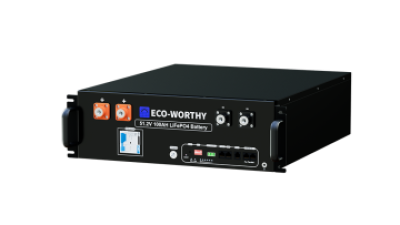
ECO-WORTHY 48V 100Ah Server Rack LiFePO4 Battery: Reliable Energy Storage for Modern Power Systems

As renewable generation expands, dependable storage is becoming essential to modern power systems. The International Energy Agency’s *Batteries and Secure Energy Transitions* report estimates that global battery storage capacity must grow to approximately 1,200 GW by 2030 to support the clean-energy transition. Against this backdrop, a 48V 100Ah server-rack LiFePO4 battery provides a practical foundation for solar installations, UPS backup systems, and off-grid power. Its lithium iron phosphate chemistry is valued for strong thermal stability, long cycle life, and consistent performance, helping users manage daily energy shifting and backup demands with greater confidence.

Designed for organized energy infrastructure, the rack-mount format uses available cabinet space efficiently while supporting scalable system integration. Real-time monitoring enables users to track key operating information, such as voltage, current, state of charge, and battery condition, allowing maintenance decisions to be based on timely data. The U.S. Department of Energy’s *Energy Storage Grand Challenge Roadmap* also identifies safety, durability, affordability, and interoperability as major priorities for storage deployment—areas directly relevant to residential, commercial, and remote applications. With a 48V architecture suited to many inverter and power-system configurations, this battery can help improve energy availability while reducing dependence on conventional backup generation.

FAQS

How should I calculate the battery capacity I need?

Start with the actual equipment load, not the inverter’s label. Record continuous watts, startup surges, and backup hours. A 48V, 50Ah battery stores about 2.4 kWh nominally. Usable energy is lower after discharge and conversion losses. At 90% discharge and 90% efficiency, usable energy is roughly 1.94 kWh. Verify this with real equipment measurements.

Why are startup surges important?

Some equipment briefly draws much more power when starting. The battery and inverter must handle that peak current. Measure the largest startup surge. A tidy spreadsheet may still miss it.

What rack conditions should I check before installation?

Measure available height, depth, ventilation space, and cable routes. Photograph the rack area before ordering equipment. Record the coldest and hottest temperatures. Check humidity limits and airflow around the cabinet.

Does every 48V battery work with every 48V inverter?

No. Confirm voltage range, peak current, charging profile, communication protocol, and protection functions. Check whether parallel modules are supported. Voltage alone proves little.

How should I manage charging?

Confirm the charger’s voltage range, current limit, termination method, and battery requirements. Use charging settings from the technical datasheet. Match current to cable size and cooling conditions. Avoid charging below freezing unless low-temperature protection is available.

Can deeper discharges reduce battery service life?

Frequent deep discharges can increase battery stress and shorten service life. Partial charging may suit backup applications better. Keep some reserve capacity. Real demand can change unexpectedly.

What affects the battery’s expected lifespan?

Temperature, discharge depth, charging speed, and storage conditions all affect aging. Heat accelerates capacity loss. Review cycle-life data at the stated discharge depth, not only the highest advertised figure. Use a conservative estimate.

What maintenance should I perform after installation?

Review alarm logs and inspect terminals, connections, airflow, and recorded capacity. Small warnings can reveal loose cables or unusual cycling. Recheck capacity after extended operation. Battery aging is not perfectly linear, and my estimates may need correction.

Conclusion

Choosing the right Rack Mounted Lithium Battery begins with a clear understanding of your power requirements, operating environment, load profile, and backup duration. Compare available battery chemistries, capacities, and voltage options to ensure the system can support both present and future energy demands. Confirm that the battery fits your rack dimensions, follows the required mounting standards, and remains within the rack’s weight limits.

Safety and reliability are equally important. Look for effective battery management, thermal protection, monitoring functions, and recognized certifications. Evaluate charging speed, discharge performance, cycle life, maintenance needs, and expected service life under your actual usage conditions. Finally, verify compatibility with inverters, chargers, power systems, and communication interfaces. A careful review of warranty coverage, technical support, replacement options, installation requirements, and total ownership cost will help you select a dependable solution that delivers stable performance and long-term value.
Sophia

Sophia

Sophia is a dedicated marketing professional with a profound understanding of clean energy solutions. Her passion lies in empowering people to break free from traditional power grids and enjoy the freedom that comes with independent energy sources. With a commitment to showcasing the convenience......
Previous 2026 Top Server Rack Battery Types Which Is Best?