Leave Your Message
*Name Cannot be empty!
*City Cannot be empty!
Installation Cannot be empty!
0%

Picking the right batteries rack in 2026 isn’t just about skim-reading the price, capacity, or how it looks. You see, a rack isn’t just a pretty shelf — it’s the critical link connecting cells, monitoring systems, cooling gear, and the load. One little overlooked connection can actually bring down the whole system, so you really need to pay attention.

According to the International Energy Agency’s latest report on Batteries and Secure Energy Transitions, battery storage is playing an even bigger role now in merging renewable energy sources and making the grid more flexible. The report points towards more installations, higher safety standards, and an increasing need for reliable performance over its lifetime. For data centers, the Uptime Institute’s 2024 Global Data Center Survey also emphasizes how costly power outages can be. So, choosing the right battery rack isn’t just a quick procurement decision — it’s a serious engineering consideration.

Don’t just go by the label. Take a closer look at how much usable energy it provides, the maximum current it can handle, compatibility with your voltage, thermal management needs, how sturdy the enclosure is, and how accurately it can monitor everything. Also, check the practical side — installation space, how cables will route, ease of maintenance, and how you’ll handle replacements. When it comes to server rack batteries, make sure the rack supports the specific battery chemistry you need, plus your backup duration and power distribution setup. Lithium-ion might pack more energy in a smaller space, but lead-acid could be more budget-friendly and suitable for certain environments.

From real-world experience, I’ve learned a tough lesson — even a technically top-notch rack can still give you trouble if ventilation, connectors, or access for service isn’t well-thought-out. I tend to be cautious here because specs alone often don’t reveal all the installation headaches. It’s smart to ask for test reports, warranty info, fault response procedures, and proof of safety testing from trusted suppliers. The best batteries rack isn’t necessarily the biggest or cheapest one — it’s the one that performs predictably, stays easy to service, and really fits your site’s needs.

How to Choose the Best Battery Rack in 2026?

Understanding Battery Rack Types and Their Applications

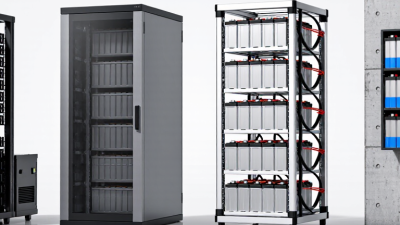
Choosing the best battery rack in 2026 starts with identifying the battery system, not the rack price. Rack types include fixed steel frames, modular cabinets, mobile racks, and seismic-rated structures. Each design solves a different installation problem. A fixed frame suits a clean, permanent room with predictable loads. Modular cabinets work better where capacity may grow. They also simplify segregation and access. In my installation reviews, technicians value clear cable paths more than polished panels. Small details matter.

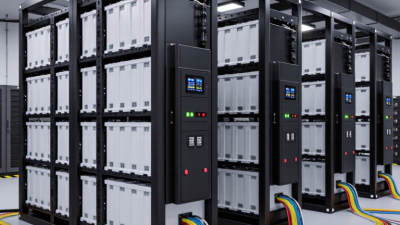
For data centers, high-density racks need strong floors, controlled airflow, and service clearance.

A narrow aisle can turn routine battery replacement into a slow, unsafe task. Industrial sites may need coated steel, raised bases, and protection from dust or moisture.

In offices or telecommunications rooms, compact wall-mounted systems can save valuable floor space. However, wall strength is often underestimated.

Battery chemistry also affects spacing, ventilation, and fire planning.

Check the combined battery weight, anchor pattern, ventilation, and emergency access before ordering. Load calculations should follow equipment data and applicable electrical and building requirements. Do not rely on appearance.

A reliable rack should resist corrosion, support proper spacing, and allow visual inspection without awkward bending.

Look for adjustable shelves, labeled connection points, and hardware that remains accessible after installation.

Seismic areas require tested restraint systems, not improvised brackets.

I have seen a well-sized rack fail its purpose because the doors blocked maintenance access. That mistake is easy to miss on drawings.

Review the layout with the installer and the person who will service it. Requirements can change.

Matching Rack Capacity to Battery Weight, Size, and Chemistry

How to Choose the Best Battery Rack in 2026?

Matching Rack Capacity to Battery Weight, Size, and Chemistry

Choosing a battery rack starts with measured facts, not visual guesses. Record each battery’s weight, length, width, height, and terminal position. Add the weight of cables, trays, and protective covers. Then compare the total load with the rack’s rated capacity. Keep a practical safety margin. A rack loaded near its limit may sag, even when the calculation appears acceptable.

Battery chemistry also changes the rack requirements. Lead-acid batteries often need stronger shelves and corrosion-resistant surfaces. Their ventilation needs can influence spacing and enclosure design. Lithium-based systems are usually lighter, but they may require better heat control and clear access around monitoring equipment. Never assume lighter means easier. Shape, center of gravity, and service clearance matter too. I have seen compact batteries create awkward pressure points because their weight was poorly distributed.

Tips: Measure twice. Leave room for airflow and maintenance. Check shelf deflection under full load. Use adjustable supports when battery sizes may change. Review the rack with a qualified electrical or structural professional before installation.

A useful rack should remain stable during routine servicing, not only on delivery day. Anchor points, floor strength, and seismic conditions deserve attention. Some designs look efficient but leave no hand clearance. That is a real weakness. Recheck the layout after cables are installed, because cable bends can reduce access and shift practical space.

Evaluating Materials, Durability, and Environmental Resistance

Choosing the best battery rack in 2026 requires more than checking its load rating. For Server Rack Lifepo4 Solar Batteries, material selection affects safety, service life, and installation accuracy. Powder-coated steel offers strong support and resists everyday impacts. Aluminum reduces weight and performs well in humid areas. However, aluminum may require careful fastener selection to prevent galvanic corrosion. Stainless steel suits harsh environments, but its higher cost needs practical justification.

Durability depends on more than thick panels. A reliable rack should have reinforced corners, stable leveling feet, and secure battery restraints. Check the rack’s maximum static load, ventilation design, and compatibility with battery dimensions. Leave enough clearance for cable bends and maintenance access. Small details matter. I have seen crowded installations become difficult to inspect after only a few months.

Environmental resistance deserves close attention. Coastal sites need corrosion-resistant coatings and sealed hardware. Hot rooms require materials that remain stable during repeated temperature changes. Dusty locations benefit from protected cable routes and easy-clean surfaces. Water exposure should be assessed realistically, not assumed away. Even a strong coating can fail after scratches, poor cleaning, or careless drilling. Rack placement, drainage, and regular inspections often matter as much as the material itself. A written site assessment can expose weaknesses before the batteries are installed.

Comparing Rack Layouts, Accessibility, and Space Requirements

Choosing the best Batteries Rack in 2026 starts with the room, not the catalog. Measure clear width, ceiling height, door swing, and service aisles before comparing layouts. A two-row arrangement can increase capacity, but it may create a narrow center path. Single-row racks usually simplify inspection and cable tracing. They also consume more wall length. Count access space twice. Batteries need room for installation, testing, replacement, and emergency movement.

Technicians should reach terminals without leaning over adjacent modules. Front-access designs suit shallow rooms and frequent maintenance. Front-and-rear access can improve airflow and reduce cable congestion, but it needs space behind the rack. Sliding shelves appear convenient. Their loaded weight may challenge the floor and the operator. Check the rack’s rated load, anchoring method, ventilation pattern, and clearance requirements against battery specifications and local safety guidance. Do not rely on a drawing alone. A tape measure often reveals the real problem.

Layout decisions should include future expansion. Leaving one empty bay may cost space now, yet prevent a disruptive rebuild later. Mark columns, drains, thresholds, and low ceiling beams on the plan. These details are easy to miss. In one review, a generous aisle looked acceptable until an open cabinet blocked the only exit route. That mistake changed the preferred layout. Review doors in every position, not just when closed. Record measurements, loading assumptions, inspection intervals, and approval checks so another technician can verify them.

Checking Safety Features, Ventilation, and Compliance Standards

Choosing the best battery rack in 2026 requires more than checking capacity and price. For Server Rack Lifepo4 Batteries, examine the battery management system, emergency disconnect, temperature sensors, and cell-level monitoring. A rack should stop charging when temperatures rise abnormally. It should also provide clear cable routes and protected terminals. Small installation details matter.

Ventilation needs careful interpretation. Lithium iron phosphate batteries do not normally release hydrogen like lead-acid batteries, but damaged cells can produce hot gases during thermal runaway. The rack room should therefore support reliable heat removal, smoke detection, and safe exhaust planning. UL 9540A testing helps evaluate fire propagation and gas hazards. NFPA 855 also addresses spacing, detection, suppression, and installation controls for energy storage systems. A sealed cabinet is not automatically safer. That assumption deserves review.

Compliance evidence should match the complete system, not only individual cells. Check applicable certifications, test reports, short-circuit protection, and local fire-code approval. IEC 62619 is relevant to industrial lithium battery safety, while UL 1973 commonly covers stationary battery systems in applicable markets. The International Energy Agency reported that battery storage additions in the power sector reached about 42 GW in 2023, nearly doubling from 2022. That growth increases the value of disciplined rack selection. I would request documented test conditions, because a certificate without operating limits can mislead. Controls must remain accessible. Keep airflow paths clear. Safety cannot be added later.

How to Choose the Best Battery Rack in 2026? - Checking Safety Features, Ventilation, and Compliance Standards

Evaluation Dimension What to Check Lead-Acid Battery Rack Lithium-Ion Battery Rack Recommended 2026 Selection Practice
Primary Use Match the rack to the battery chemistry, total weight, voltage, maintenance method, and installation location. Suitable for stationary backup systems when corrosion resistance, spill control, and service access are addressed. Suitable for energy storage and backup systems when thermal management, fault isolation, and fire-risk controls are integrated. Select a rack that is specifically rated for the installed chemistry rather than relying only on physical fit.
Structural Load Capacity Verify the documented static load, shelf load, center of gravity, anchoring method, and maximum number of battery units. Often requires substantial shelf capacity because lead-acid batteries are heavy and may concentrate load on individual shelves. Check both total mass and concentrated module loads, especially for slide-out trays or compact cabinets. Require a certified load calculation and permanently marked maximum load for every shelf or compartment.
Seismic and Stability Protection Check floor anchorage, anti-tip protection, bracing, door restraint, and compliance with the project’s seismic design criteria. Use front and rear restraints where required to prevent battery movement during vibration or seismic events. Secure modules, trays, busbars, and internal wiring against movement and impact during abnormal events. Obtain an anchorage design based on the applicable local building code, project conditions, and seismic category.
Ventilation and Gas Control Determine whether the chemistry can release hydrogen, vapors, or corrosive gases during normal operation, charging, or failure. Provide engineered ventilation for hydrogen accumulation during charging; avoid enclosed spaces without verified airflow and exhaust paths. Routine hydrogen ventilation is generally not the primary control, but thermal monitoring, smoke detection, and emergency exhaust may be required by the design and authority having jurisdiction. Use a documented ventilation calculation and confirm whether exhaust air must discharge outdoors or be separated from ignition sources.
Thermal Management Check heat dissipation, allowable ambient temperature, spacing between units, and compatibility with the room HVAC system. Allow sufficient spacing for heat removal and maintenance; charging temperature limits should follow the battery manufacturer’s instructions. Provide temperature sensors, balanced airflow or liquid cooling where specified, and protection against overheating and thermal propagation. Verify the rack and battery system together, including worst-case heat output at maximum charge and discharge.
Electrical Safety Inspect touch protection, insulation, creepage and clearance, polarity labeling, cable routing, and short-circuit protection. Use insulated tools, protected terminals, inter-tier connectors, and appropriately rated overcurrent protection. Include battery-management-system interfaces, contactors, fuses, disconnects, and protection against DC arc hazards. Confirm installation requirements against NFPA 70, IEC 62477-1, or the electrical code applicable to the project.
Fire and Thermal-Runaway Controls Review detection, suppression, separation distance, emergency shutdown, and response procedures for credible failure scenarios. Focus on hydrogen control, acid-spill response, ignition-source management, and safe charging practices. Assess thermal-runaway propagation, fire detection, gas detection where applicable, isolation, and emergency response provisions. Request system-level test evidence, including UL 9540A data where required for the installation or permitting process.
Corrosion and Spill Protection Check coating, material compatibility, drainage, secondary containment, and resistance to electrolyte exposure. Use acid-resistant finishes, spill trays or containment, corrosion-resistant hardware, and accessible neutralization provisions where required. Verify compatibility with the battery enclosure, coolant, cleaning agents, and any electrolyte released during a damaged-cell event. Choose materials and coatings based on the actual chemistry and the environmental conditions of the room or outdoor enclosure.
Service Access Confirm front clearance, rear access, removable panels, torque access, lifting points, and safe replacement procedures. Provide safe access for inspection, watering where applicable, terminal cleaning, and individual battery replacement. Provide controlled access to modules, fuses, disconnects, sensors, and communication wiring without exposing unnecessary live parts. Keep manufacturer-recommended working clearances and document battery lifting requirements before installation.
Environmental Protection Review indoor or outdoor rating, humidity, dust, water exposure, temperature range, and UV resistance. Indoor racks normally require a controlled environment unless the enclosure is specifically designed for outdoor use. Outdoor systems may require weatherproof construction, filtration, heating or cooling, condensation control, and controlled access. Select the required enclosure rating from the site conditions; IP ratings should be verified under IEC 60529 or the applicable test method.
Compliance Documentation Request installation instructions, certificates, test reports, drawings, maintenance procedures, and limitations of use. Review requirements related to stationary batteries, ventilation, spill control, and electrical installation under local regulations. Review cell, battery, rack, inverter, and energy-storage-system documentation as separate but interconnected safety elements. Check applicable editions of NFPA 70, NFPA 855, UL 1973, UL 9540, UL 9540A, IEC 62619, IEC 62477-1, and local fire and building codes.
Best Overall Selection Rule A rack is suitable only when its mechanical, electrical, environmental, and fire-safety characteristics match the complete battery system. Prioritize load capacity, corrosion resistance, hydrogen ventilation, spill containment, and service access. Prioritize thermal monitoring, fault isolation, propagation control, enclosure design, and system-level test evidence. Choose the design with verified documentation, code acceptance, maintainability, and a clear emergency-response plan—not only the lowest purchase price.
Important: Ventilation rates, separation distances, fire protection, seismic anchorage, and certification requirements depend on battery chemistry, capacity, enclosure type, installation location, and the authority having jurisdiction. Always verify the final design against the current local electrical, fire, building, and occupational-safety requirements.

Calculating Installation Costs, Maintenance Needs, and Long-Term Value

Choosing the best battery rack in 2026 requires more than comparing purchase prices. Calculate the complete installation cost before approving a design. Include rack hardware, cabling, breakers, ventilation, monitoring, delivery, and qualified labor. A site survey should measure floor strength, access routes, ambient temperature, and available electrical capacity. Small details matter.

For Server Rack Batteries Lifepo4, maintenance is usually predictable, but it is not zero. Inspect terminals for looseness and heat marks. Review battery management system alerts monthly. Record voltage, temperature, charge cycles, and unusual noise. Keep filters and ventilation paths clean. A qualified electrical engineer should verify protection settings and commissioning records. Follow the manufacturer’s service schedule and applicable electrical standards.

Long-term value depends on usable capacity, efficiency, replacement intervals, and downtime risk. Compare energy delivered over the expected service life, not only the initial price. My first cost spreadsheet underestimated labor because the rack had to pass through a narrow doorway. That mistake changed the final budget. It also showed why generous clearance can save money later. A lower-cost rack may require more inspections or earlier replacement. A higher initial investment can be sensible when monitoring, modular service access, and thermal control reduce interruptions. Still, projected savings are assumptions. Recheck them using measured site loads every year.

How to Choose the Best Battery Rack in 2026?

Estimated 10-year ownership cost by rack configuration, shown per usable kWh. The comparison includes installation, scheduled maintenance, and a replacement or augmentation reserve. Values are planning estimates for commercial-scale lithium-ion battery systems and exclude electricity, financing, permits, and land.

Indoor racks typically reduce installation costs but require a suitable climate-controlled room. Outdoor enclosures usually need higher upfront spending because of weather protection, thermal management, and fire-safety provisions. Modular racks can provide a lower long-term cost when maintenance access and capacity expansion are important.

FAQS

How should I choose a battery rack for a new installation?

Start with the battery system and room conditions, not the rack price. A clean permanent room may suit a fixed steel frame. Future expansion may favor a modular cabinet. The cheapest option is not always the best.

What measurements should I take before selecting a rack?

Measure room width, ceiling height, door swing, thresholds, and service aisles. Mark drains, columns, and low beams on the plan. Check every door position, including fully open cabinets. A tape measure often reveals hidden problems.

How much access space do batteries need?

Provide room for installation, testing, replacement, inspection, and emergency movement. Technicians should reach terminals without leaning over nearby modules. Front access suits shallow rooms. Rear access needs additional clearance.

Are high-density battery racks suitable for data centers?

They can work when the floor, airflow, and service clearance support the total load. Check combined battery weight and floor capacity. Narrow aisles can make replacement slow and unsafe. Capacity alone is not enough.

What safety checks matter before ordering a rack?

Review anchoring, ventilation, spacing, emergency access, and applicable electrical requirements. Seismic areas need tested restraint systems. Improvised brackets are a poor substitute. Do not rely on appearance.

Can wall-mounted battery systems save space?

Yes, they can preserve valuable floor space in offices or telecommunications rooms. However, wall strength is often underestimated. Verify the wall, anchors, battery weight, and installation method. A compact design can still create structural risks.

What maintenance features should a reliable battery rack include?

Look for adjustable shelves, labeled connection points, and accessible hardware. The rack should allow visual inspection without awkward bending. Keep ventilation paths clean. Check terminals for looseness and heat marks. Small details matter.

How should I calculate the real installation cost?

Include rack hardware, cabling, protection devices, ventilation, monitoring, delivery, and qualified labor. Also measure access routes and available electrical capacity. A narrow doorway may increase labor costs. My first estimate missed this. Recheck the budget.

How can I judge a rack’s long-term value?

Compare usable energy, efficiency, service intervals, replacement needs, and downtime risk. A higher initial cost may reduce interruptions through better access and monitoring. Projected savings remain assumptions. Review measured site loads every year.

Conclusion

Choosing the best Batteries Rack in 2026 requires more than comparing price and appearance. Start by identifying the rack type that suits your application, such as a fixed, modular, mobile, or heavy-duty design. Its capacity must match the batteries’ total weight, dimensions, chemistry, and future expansion needs. Consider strong, corrosion-resistant materials that can withstand humidity, temperature changes, vibration, and regular industrial use. The rack layout should provide efficient space utilization, clear labeling, easy battery access, and enough room for inspection and handling.

Safety is equally important. Look for stable construction, secure fastening, appropriate ventilation, spill control where necessary, and compliance with relevant electrical, fire, and workplace safety requirements. Before purchasing, calculate delivery, installation, wiring, and preparation costs, along with routine inspection and maintenance needs. A rack with a higher initial cost may offer better long-term value if it improves safety, extends service life, simplifies maintenance, and supports future battery upgrades.

Liam

Liam

Liam is a dedicated marketing professional with a profound expertise in the realm of clean energy solutions. With a passion for innovation, he is committed to promoting the convenience of utilizing independent clean energy systems, empowering individuals to break free from the constraints of......
Previous What Are the Top Types of Lithium Battery Racks?