As digital services keep growing, having reliable backup power has become a must-have for data centers. You know, a Server Rack Battery isn’t just about keeping things running during power outages; it’s also about handling voltage swings and the delays when generators kick in. And here’s the thing—by 2026, there are way more options than just your old-school valve-regulated lead-acid batteries. Now, we’re seeing lithium iron phosphate, nickel-zinc, and newer lithium-ion systems all vying for limited space in server racks. They each bring their own perks—whether it’s safety, how long they last, weight, ease of maintenance, or cost—that make choosing the right one a bit of a puzzle.
In this guide, I’ll walk you through the main types of batteries used today in server environments. We’ll talk about real-world factors like temperature ranges, battery management systems, how they perform when discharging, how easy they are to service, and what it takes to replace them down the line. Brands like Schneider Electric, Vertiv, Eaton, and APC all have products out there, showing how different design priorities come into play depending on what you need. For example, a compact *Battery Server Rack* might look super efficient, but the real value depends on things like airflow, monitoring systems, what kind of load it handles, and how well it’s installed. Little details really do add up.
Now, there’s no one-size-fits-all solution. Valve-regulated lead-acid (VRLA) batteries are still pretty common—they’re familiar and supported everywhere—but they come with downsides like heavier weight and shorter lifespan, which can get pricey over time. Lithium iron phosphate batteries often pack a better energy density and last longer, but they do need careful management and tend to cost more upfront. Nickel-zinc batteries might help with some thermal issues, but since they’re less common and we don’t have decades of field experience with them, it’s worth doing some homework. The truth is, battery performance can vary a lot—shaped by temperature, maintenance routines, and actual load conditions—so making a call isn’t always straightforward. The best decision comes from understanding your specific needs, doing proper testing, and being honest about risks—rather than just trusting marketing hype.
2026 Top Server Rack Battery Types Which Is Best?
Server racks commonly use VRLA, lithium-ion, LFP, or nickel-cadmium batteries. Each chemistry handles heat, space, maintenance, and backup demands differently. VRLA remains familiar and affordable, but it is heavy and loses capacity faster in warm rooms. It also needs ventilation and regular inspection. It needs space.
Lithium-ion batteries deliver higher energy density and longer service life. Their battery management system monitors voltage, temperature, and cell balance. However, installation quality matters greatly. Poor thermal control can create serious reliability concerns. LFP chemistry offers strong thermal stability and a longer cycle life than traditional lithium-ion designs. It usually requires more cabinet space for equal energy. Costs matter.
Ni-Cd batteries tolerate harsh temperatures and repeated cycling better than many alternatives. They can suit remote facilities with difficult environmental conditions. Yet, their higher purchase cost and specialized handling may challenge smaller data centers. In rack planning, compare usable energy rather than nameplate capacity. Check discharge time, recharge limits, cabinet airflow, monitoring interfaces, and maintenance access. A 10-minute load may favor one design, while a two-hour outage changes the calculation. The overlooked detail is future replacement work. Batteries must fit through doors, connect safely, and match the power system’s charging profile. No chemistry is perfect. Engineers should verify manufacturer data, independent test records, applicable safety requirements, and site temperature history before approval.
In 2026, VRLA lead-acid remains a practical Server Rack Battery choice for many data rooms. Its main advantage is a low upfront cost. A typical unit offers a three-to-five-year design life under controlled conditions. That figure is not a promise. Heat, deep discharges, poor ventilation, and frequent power events can shorten it sharply.
The battery sits quietly in the rack, but small details matter. At 25°C, its service life may approach the rated range. In a warmer room, aging accelerates. Technicians should inspect swollen cases, loose terminals, corrosion, and unusual heat during routine maintenance. A battery cabinet with clear airflow makes inspection easier. It also reduces the chance of hidden thermal problems.
VRLA systems usually need less daily attention than flooded batteries. They do not require regular water replacement, which simplifies deployment near servers. However, they still need compatible charging, periodic capacity testing, and documented replacement planning. Runtime calculations should use the actual server load, not the nameplate maximum. That mistake is common.
The low purchase price can become misleading when replacement labor and downtime are included. I would question any three-year estimate that ignores room temperature and discharge history. A careful facility manager compares five-year operating costs, rack space, maintenance access, and emergency runtime before choosing this Server Rack Battery type. Sometimes, the cheapest battery is only cheap on day one.
| Battery Type | Typical Design Life at 20–25°C | Relative Upfront Cost | Usable Depth of Discharge | Typical Round-Trip Efficiency | Recharge Characteristics | Maintenance and Safety | Space and Weight | Best-Fit Application |
|---|---|---|---|---|---|---|---|---|
| VRLA AGM Lead-Acid | Approximately 3–5 years for general-purpose models; longer-life models may be rated for 10–12 years under controlled conditions. | Lowest | About 50% recommended for routine cycling; deeper discharge can shorten service life. | Approximately 75–85% | Moderate to slow; charging must follow the manufacturer’s voltage and current limits. | Sealed and valve-regulated; no routine water addition. Requires ventilation, thermal monitoring, and protection against overcharging. | Large and heavy for the same usable energy; high rack or floor loading may be required. | Budget-focused UPS backup with infrequent outages and short runtime requirements. |
| VRLA Gel Lead-Acid | Approximately 5–12 years, depending on construction, temperature, and cycling frequency. | Low to medium | About 50% recommended for routine cycling. | Approximately 75–85% | Generally slower than AGM and sensitive to incorrect charging voltage. | Sealed and low-maintenance. Good resistance to leakage, but requires suitable charging control and ventilation. | Heavy and space-intensive compared with lithium-ion systems. | UPS installations requiring sealed lead-acid batteries and moderate cycle frequency. |
| Flooded Lead-Acid | Approximately 10–15 years in stationary applications with proper maintenance and temperature control. | Low to medium | About 50% recommended for routine cycling. | Approximately 75–85% | Moderate; charging can generate hydrogen and oxygen gases. | Requires ventilation, spill control, periodic inspection, and electrolyte or water maintenance. Usually unsuitable for ordinary server rooms. | Very heavy and requires dedicated battery-room infrastructure. | Dedicated industrial battery rooms where maintenance and ventilation systems are available. |
| Lithium-Ion NMC | Approximately 8–15 years or about 2,000–5,000 cycles, depending on temperature, operating window, and cell design. | Medium to high | About 80–90% commonly available for routine operation. | Approximately 90–95% | Fast recharge capability; requires a battery management system for cell balancing and protection. | Low routine maintenance. Requires certified protection, thermal monitoring, and appropriate fire-safety design. | Compact and substantially lighter than lead-acid for equivalent usable energy. | Space-constrained data centers needing long runtime, frequent cycling, or reduced battery-room footprint. |
| Lithium Iron Phosphate (LFP) | Approximately 10–15 years or about 3,000–6,000 cycles, subject to temperature and operating conditions. | Medium to high | About 80–90% commonly available for routine operation. | Approximately 90–96% | Fast recharge capability with a battery management system and controlled charging profile. | Low routine maintenance and strong thermal stability compared with many other lithium-ion chemistries; protection electronics remain essential. | Compact and lightweight compared with lead-acid, with lower rack loading for equivalent usable energy. | Modern UPS and energy-storage systems where lifecycle cost, space efficiency, and frequent cycling matter. |
| Nickel-Zinc (NiZn) | Approximately 5–10 years or about 1,000–2,000 cycles, depending on application and charging conditions. | Medium to high | About 70–80% commonly available for routine operation. | Approximately 80–90% | Fast recharge capability; requires a compatible charger and battery monitoring system. | Generally maintenance-free and avoids lead and cadmium, but deployment experience and supplier availability are more limited. | Lighter and more compact than lead-acid for many high-power applications. | High-power UPS systems where rapid recharge and reduced weight are important. |
Selection note: VRLA AGM is usually the best choice when the priority is the lowest initial purchase cost and infrequent short-duration backup. LFP is often preferable when space, weight, efficiency, recharge speed, and total lifecycle cost are more important. Actual performance depends on battery quality, ambient temperature, UPS charging settings, discharge rate, maintenance, and the required backup runtime.
2026 Top Server Rack Battery Types: Which Is Best?
Lithium-ion batteries are reshaping the Server Battery Rack market. The U.S. Department of Energy’s Energy Storage Grand Challenge Roadmap reports lithium-ion energy densities near 150–250 Wh/kg. Traditional lead-acid systems often deliver about 30–50 Wh/kg. In practical installations, that supports two to three times more usable energy within similar cabinet space. Space matters. More capacity can reduce rack count, cooling demand, and floor loading.
Service life is another strong advantage. Industry reliability studies commonly place lithium-ion systems near 10–15 years under controlled operating conditions. Lead-acid batteries often require replacement after three to six years. The 2024 Uptime Institute Global Data Center Survey continues to emphasize availability, maintenance planning, and operational resilience. Fewer battery replacements can reduce service interruptions and labor exposure.
Lithium-ion is not automatically perfect. Higher purchase costs, thermal management, battery monitoring, and careful commissioning remain important. Poorly balanced cells can still create weak points. I have seen compact designs look efficient on paper, then lose value through oversized cooling equipment. Temperature, discharge depth, ventilation, and emergency procedures must be reviewed together. A credible selection should compare total cost, tested cycle life, fault monitoring, and the site’s real load profile, not energy density alone.
Lithium-ion batteries provide approximately 2–3 times the energy density of traditional VRLA batteries and typically offer a 10–15-year service life. The chart uses representative midpoint values from commonly reported industry ranges; actual performance depends on temperature, operating conditions, depth of discharge, and maintenance.
In 2026, server operators are examining lithium iron phosphate (LFP) batteries for rack-mounted backup power. A Server Rack Battery 48v system using LFP chemistry can deliver about 2,000–5,000 cycles under suitable operating conditions. That range is useful, but it is not a guarantee. Actual life changes with depth of discharge, charging habits, ambient temperature, and load size. Experienced technicians also check the battery management system before trusting a cycle claim. It should record cell voltage, temperature, current, and fault events.
LFP’s improved thermal stability matters in dense equipment rooms. During charging or high demand, stable cells can reduce thermal stress compared with less stable chemistries. Heat does not disappear. Poor airflow, blocked vents, or a failed sensor can still create operating risks. Keep clear space around each module, and verify alarms during commissioning. Independent load testing is wise because a datasheet rarely matches every rack. Experience helps.
For a 48v installation, technicians should match battery capacity with the UPS load profile and expected runtime. A lightly loaded rack may cycle shallowly, while a busy rack can consume capacity faster. The 2,000-cycle lower estimate deserves attention when outages are frequent or batteries discharge deeply. The 5,000-cycle figure may require controlled temperatures and careful charging. That assumption can fail. I would review monthly logs, temperature trends, and discharge results before replacing a unit. Small inconsistencies often expose poor settings, aging cells, or an inaccurate runtime model.
2026 Top Server Rack Battery Types: Nickel-Cadmium for Extreme Temperatures
Nickel-cadmium batteries remain a serious option for server racks exposed to heat, cold, or unstable site conditions. Their 15–20-year service life can reduce replacement work in remote facilities. A 48v Server Rack Battery using nickel-cadmium cells can continue delivering dependable power across wide temperature ranges. Heat changes everything.
In practical installations, these batteries tolerate deep discharge and repeated cycling better than many alternatives. They also recover well after long standby periods. Technicians should still verify charging voltage, ventilation, connector condition, and cell balance during scheduled inspections. A temperature sensor near the rack can reveal problems before alarms appear.
This chemistry is not automatically the best choice. Nickel-cadmium batteries may require higher upfront investment and careful handling during maintenance. Their performance can also suffer when charging controls are poorly configured. That is an easy detail to underestimate. I would compare expected temperature, load profile, maintenance access, and replacement logistics before selecting one. Field records matter more than a simple lifespan claim. Test the battery under realistic load conditions, not only during routine standby checks. Local disposal and handling requirements must also guide the installation plan.
Lithium-ion batteries usually deliver higher energy density and longer service life than VRLA systems. They also reduce floor space and battery-room cooling demand. However, lithium-ion requires stronger monitoring, thermal controls, and installation discipline. VRLA remains practical for smaller rooms, tight budgets, and familiar maintenance programs. Sodium-ion is promising, but field evidence remains limited. That matters.
Total cost of ownership should include replacement labor, cooling, monitoring, disposal, and downtime exposure. The IEA’s Electricity 2024 report estimates data centers consumed about 415 TWh globally in 2024. Efficiency pressures are becoming harder to ignore. A battery that occupies less space may improve facility efficiency, but its impact on PUE depends on charging losses, cooling, and power-conversion equipment. Runtime also needs testing under real loads, not only datasheet conditions. Uptime Institute’s 2024 Global Data Center Survey reported that 54% of respondents experienced an outage costing more than $100,000. A cheaper battery can become expensive quickly.
Tips: Request a measured runtime curve at your expected load. Confirm compliance evidence for UL 1973, then review NFPA 855 requirements with the authority having jurisdiction. Check ventilation, fire detection, clearances, and emergency procedures. During commissioning, use thermal scans and capacity tests. Review cell-level alarms monthly. A weakness remains: future load profiles are often guessed. Add expansion capacity, but avoid oversized strings that operate inefficiently for years.
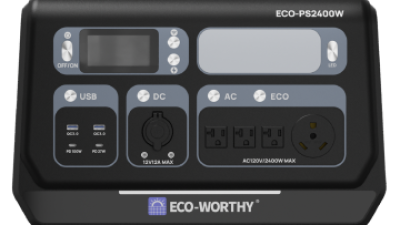
A 2400W portable power station with a 2048Wh lithium battery is a practical option for households, RV users, and outdoor activities that require dependable electricity away from the grid. Insights from the International Energy Agency (IEA) highlight the growing importance of energy resilience, while Grand View Research reports continued demand for portable power solutions as consumers seek cleaner, quieter, and more flexible backup energy. When comparing models, buyers should consider usable capacity, continuous and peak output, battery chemistry, charging speed, safety controls, and the number of available ports rather than focusing only on headline wattage.
This configuration delivers 2400W of output through 10 ports, allowing it to run most household appliances, camping equipment, and essential electronics. Its long-life LiFePO₄ battery is supported by an intelligent battery management system designed to monitor temperature, voltage, and charging conditions. AC, solar, and vehicle charging provide flexible replenishment, while pass-through charging allows connected devices to remain powered during recharging. WiFi and Bluetooth app control make it easier to monitor performance remotely, and an under-10-millisecond UPS switchover can help protect essential equipment during brief power interruptions.
Lithium-ion can provide roughly two to three times more usable energy in similar cabinet space. This may reduce rack count, cooling demand, and floor loading. The advantage is practical. Its higher purchase cost still needs careful review.
Controlled installations often achieve about 10–15 years of service. Actual life depends on temperature, discharge depth, charging, and maintenance. A neat spreadsheet can still mislead. Tested field data matters more than a simple lifespan promise.
They can perform reliably across wide temperature ranges. Their service life may reach 15–20 years with proper maintenance. They also tolerate deep discharge and repeated cycling well. Heat changes everything.
Technicians should check charging voltage, ventilation, connectors, and cell balance. A temperature sensor near the rack can reveal problems early. Long standby periods still require inspection. Do not trust silence from the alarm system.
VRLA batteries may suit smaller rooms, limited budgets, and familiar maintenance programs. Their shorter replacement cycle can increase labor and downtime exposure. They remain useful in some sites. Lower purchase cost is not the whole calculation.
Sodium-ion technology appears promising, but field evidence remains limited. Operators should request measured runtime, safety data, and realistic cycle results. Early adoption carries uncertainty. That uncertainty deserves a price.
Include purchase cost, replacement labor, cooling, monitoring, disposal, and downtime exposure. Charging losses and power-conversion equipment also affect efficiency. A compact battery may not improve efficiency if cooling equipment is oversized. The rack can look efficient on paper.
Measure runtime at the expected load, not only under datasheet conditions. Complete thermal scans and capacity tests during commissioning. Review ventilation, fire detection, clearances, and emergency procedures. Check cell-level alarms monthly. Future load growth is often guessed.
Choosing the right Server Rack Battery in 2026 requires balancing cost, performance, safety, and long-term operating conditions. VRLA lead-acid remains attractive for its low initial price and simple deployment, but its typical three- to five-year design life, larger footprint, and lower energy density can increase replacement and space costs. Lithium-ion batteries provide two to three times greater energy density and may deliver a 10- to 15-year service life, making them suitable for facilities where space and runtime efficiency are priorities. LFP batteries offer approximately 2,000 to 5,000 cycles and improved thermal stability, while nickel-cadmium systems can provide 15 to 20 years of service in demanding extreme-temperature environments.
The best selection should be based on total cost of ownership, required runtime, power usage effectiveness, maintenance needs, and installation conditions. Buyers should also verify compliance with relevant requirements such as UL 1973 and NFPA 855. A well-matched battery system can improve resilience, reduce lifecycle expenses, and support reliable data center operations.